Compound your customer lifetime value
Chapters
Tools
 Spots churn risk early with health scoring, automated plays, and renewal forecasting for subscription businesses.
 Centralises customer data from CRM, billing and support tools to reveal churn risk and growth opportunities.
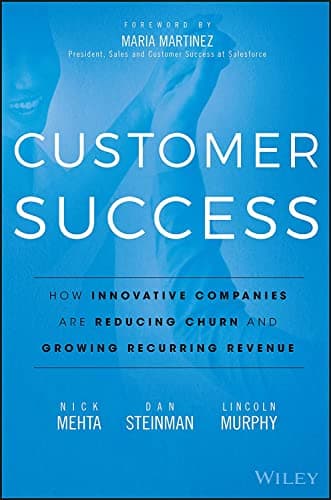
Books
About this playbook
Lifetime value is not a number you report at year-end. It is the compounding interest rate on every customer you have already won, and that distinction changes everything about where a lean operator should spend their next hour. Most founders treat LTV as an outcome of acquisition, a backward-looking scoreboard that tells you how the funnel performed last quarter, and so they pour their attention into the top of that funnel where the next logo lives. The maths runs the other way. A customer base that retains and expands is a base that grows on its own, which means the highest-leverage growth lever you own is not winning the next deal, it is engineering the slope of the revenue line for the accounts already inside the building.
Read it that way and the whole revenue-per-client pillar collapses into one machine with one dial. Pricing, retention and expansion stop being three separate disciplines competing for your attention and become three settings on a single instrument, and the master reading on that instrument is net revenue retention. Above 100% your installed base grows while you sleep, with zero new acquisition spend; below 100% you are running up a down escalator, losing ground before a single new sale lands. That is the reframe this playbook is built on, and it is the most under-used edge a solo B2B operator has.
By the end you will be able to calculate your customer lifetime value the profit-true way rather than the flattering top-line way, read your net revenue retention as a steering wheel rather than a vanity metric, diagnose which of your three dials is the weakest, and pull that one deliberately instead of spreading thin effort across all three. You will also see how an AI agent runs the compounding customer-success work that used to demand a whole team, which is the Solid Growth thesis applied directly to revenue per client. The goal is a base that compounds. Let us build the machine that gets you there.