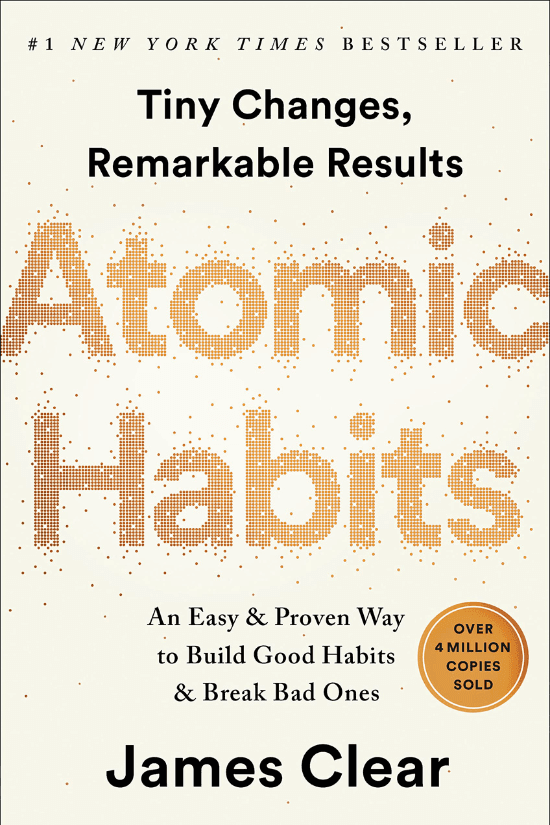
Atomic Habits
On this pageWhat I like
What I like about this book
Atomic Habits reminded me that systems beat goals. It helped me build better daily routines, especially under pressure.
Why read it
Whether you want to write more, market better, or sleep earlier, this book helps you stick to the plan.
Atomic Habits by James Clear is on our shelf for the people side of a business, on the productivity line. We only recommend a book when it gives you something you can put to work, not just something to agree with.
It is one of the books behind our playbook Master your workweek, so its ideas already have a place to land in your week.
Who it's for
Key take-aways
Book summary
Introduction
Atomic Habits is a transformative guide to building good habits, breaking bad ones, and mastering the small actions that lead to remarkable results. James Clear presents a framework for understanding the science of habits and shows how tiny, consistent changes can compound over time to create meaningful progress. Clear emphasises that habits are the building blocks of life’s success and that focusing on systems rather than goals leads to sustained improvements.
Part I: The Fundamentals
The surprising power of atomic habits
Clear opens with the principle that small, consistent changes atomic habits lead to compounding benefits over time. Drawing from examples like the British Cycling Team’s marginal gains, Clear illustrates how a 1% improvement each day compounds to a 37x improvement over a year. He emphasises that habits are the compound interest of self-improvement, with minor tweaks leading to substantial results in the long run.
Forget goals, focus on systems
Clear argues that goals are outcome-based and often fail to provide long-term results. Instead, the focus should be on systems repeatable processes that align with identity change. For instance, instead of aiming to "run a marathon," one should aim to "become a runner." This identity-based approach ensures habits are integrated into one’s self-perception.
Part II: The Four Laws of Behaviour Change
Law 1: Make it obvious
Clear explains that cues trigger habits. By making these cues obvious, we can set up our environment for success. Examples include placing running shoes by the door to encourage exercise or writing down specific plans for new habits. He introduces "habit stacking," which pairs a new habit with an existing one, like meditating after brushing your teeth.
Law 2: Make it attractive
Habits are more likely to stick when they are appealing. Clear highlights the role of dopamine in habit formation, suggesting ways to enhance anticipation. Bundling activities combining something you want to do with something you need to do makes habits more desirable.
Law 3: Make it easy
Clear emphasises the importance of reducing friction. Simplifying actions and lowering the effort required increases the likelihood of habit adoption. He introduces the "two-minute rule," which suggests starting habits with actions that take two minutes or less, like "open a book" rather than "read for an hour."
Law 4: Make it satisfying
Habits that provide immediate rewards are more likely to be repeated. Clear encourages reinforcing good habits with small, tangible rewards, such as crossing off tasks on a habit tracker. Conversely, he advocates for making bad habits unsatisfying by introducing negative consequences.
Part III: Advanced Tactics for Sustained Habits
The Goldilocks Rule
To maintain motivation, tasks should be challenging but achievable. Clear calls this the Goldilocks Zone, where habits remain engaging without becoming overwhelming. This principle is key to avoiding burnout and sustaining habits over time.
Identity and habits
The cornerstone of lasting change is identity transformation. Clear argues that habits are not just about achieving results but about becoming the kind of person you aspire to be. Each action serves as a vote for the person you want to become, reinforcing positive identity shifts.
Key Takeaways
- Start small: Focus on atomic habits tiny changes that build momentum.
- Focus on systems, not goals: Develop processes that align with the person you want to be.
- Leverage the four laws: Make habits obvious, attractive, easy, and satisfying.
- Redefine identity: Align habits with your self-image for sustainable change.
- Be consistent: Small, daily improvements compound into significant progress over time.
Atomic Habits provides a blueprint for creating lasting transformation through small, intentional actions. By applying its principles, anyone can achieve meaningful growth and long-term success.