Work the System
On this pageWhat I like
What I like about this book
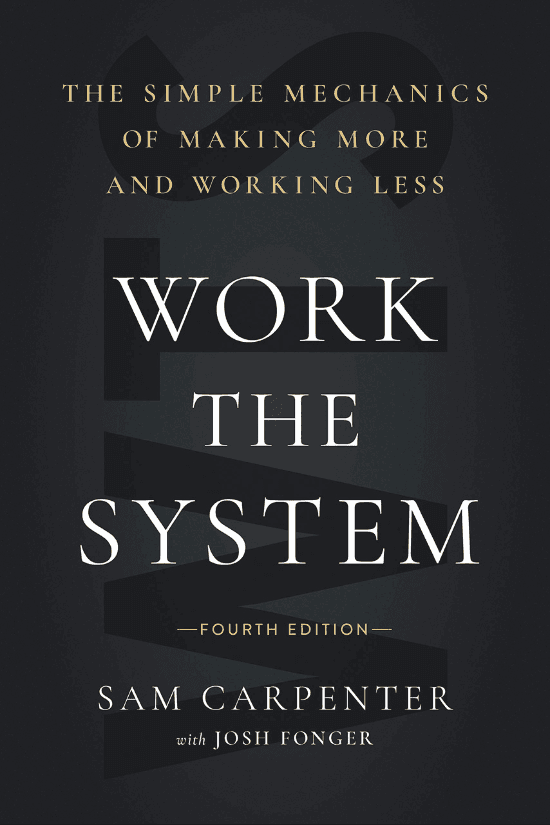
This book shows how to move from chaos to clarity. It’s about documenting the way you work, so others can follow.
Why read it
It helps you step out of reactive mode and create repeatable success.
Work the System by Sam Carpenter is on our shelf. We only recommend a book when it gives you something you can put to work, not just something to agree with.
Below: who it is for, what it says in short, and how to turn it into a change in how your business runs. Two minutes, and you will know if it belongs on your desk.
Who it's for
Key take-aways
Book summary
Introduction Work the System by Sam Carpenter is a practical guide to transforming your business by adopting a systems-driven mindset. Carpenter argues that most problems arise from flawed processes rather than people and that sustainable success comes from documenting, improving, and consistently following those processes. By stepping back to view your business as a collection of systems, you can simplify operations, reduce chaos, and achieve predictable results. This book is a blueprint for business owners who want to regain control and build a scalable, stress-free organisation.
The Systems Mindset Carpenter introduces the concept of the "systems mindset," which involves seeing your business and life as interconnected processes that can be refined and optimised. He emphasises the importance of stepping back from the day-to-day chaos to identify the root causes of inefficiencies. By focusing on the systems rather than individual problems, you can fix recurring issues once and for all. This mindset enables you to transition from being a firefighter to a strategist.
The Three Key Elements Carpenter outlines three foundational principles for adopting the systems mindset:
- Document Your Systems
Most business owners operate with undocumented, inconsistent processes, which lead to confusion and errors. Carpenter advises creating detailed documentation for every core function of your business, from customer service to operations. This provides clarity, ensures consistency, and allows team members to execute tasks efficiently without constant oversight.
- Separate Strategy from Execution
Leaders often get bogged down in daily tasks, leaving no time for strategic thinking. Carpenter advocates for clearly defining your role as a strategist while delegating operational tasks to your team. This separation ensures that you can focus on the big picture while systems handle the routine details.
- Optimise Incrementally
Systems are not static. Carpenter encourages a culture of continuous improvement, where processes are regularly reviewed and refined based on feedback and outcomes. This ensures that your business remains efficient and adaptable over time.
Systemising Your Business The core of the book lies in its practical steps for systemising your business:
- Identify Your Key Systems: Pinpoint the critical processes that drive your business, such as sales, marketing, and customer support. Prioritise these systems for documentation and improvement.
- Create a Systems Document: Write a master document outlining your company’s vision, mission, and key processes. This document serves as the foundation for aligning your team and ensuring consistency.
- Empower Your Team: Assign ownership of each system to specific team members, empowering them to maintain and improve their assigned processes. This fosters accountability and ensures smooth operations.
- Measure and Adjust: Use metrics to evaluate the performance of your systems. Regularly review these metrics to identify inefficiencies and make data-driven improvements.
The Benefits of Systemisation By systemising your business, you unlock several benefits:
- Increased Efficiency: With clear processes in place, tasks are completed faster and with fewer errors.
- Scalability: A systems-driven business can handle growth without overwhelming its team or infrastructure.
- Freedom for the Owner: Systemisation reduces dependency on the owner, allowing you to step away from daily operations and focus on strategic growth or personal pursuits.
Key Takeaways
- Adopt a systems mindset: Shift from reacting to problems to proactively designing processes that prevent them.
- Document everything: Written processes ensure clarity, consistency, and accountability across your organisation.
- Separate strategy and execution: Free yourself from day-to-day operations to focus on long-term growth.
- Foster a culture of improvement: Regularly review and optimise your systems to stay competitive and efficient.
- Empower your team: Delegate responsibility for systems to your team to ensure scalability and sustainability.
Work the System is a must-read for entrepreneurs and business owners seeking a clear, actionable path to building a streamlined and scalable organisation. Carpenter’s approach simplifies complex operations, reduces stress, and empowers you to achieve sustainable success.