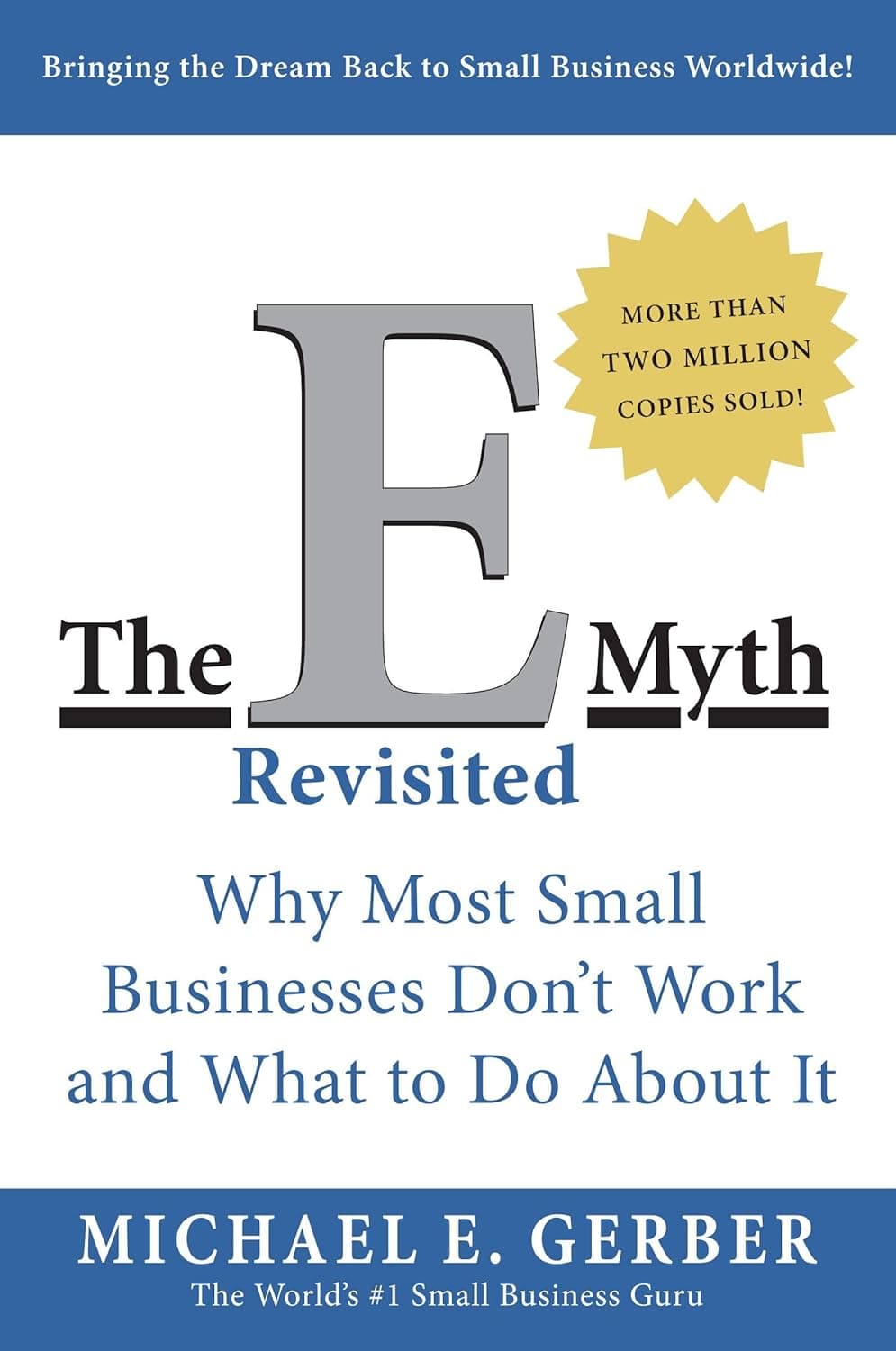
The E-Myth Revisited
On this pageWhat I like
What I like about this book
This book helped me separate ‘doing the work’ from ‘building the business.’ It’s foundational for scaling.
Why read it
It teaches you how to build systems, not just deliver services.
The E-Myth Revisited by Michael Gerber is on our shelf. We only recommend a book when it gives you something you can put to work, not just something to agree with.
Below: who it is for, what it says in short, and how to turn it into a change in how your business runs. Two minutes, and you will know if it belongs on your desk.
Who it's for
Key take-aways
Book summary
Introduction
Michael Gerber’s The E-Myth Revisited challenges the common myths about entrepreneurship and offers a practical framework for building businesses that thrive. Gerber highlights that many small businesses fail because their owners misunderstand the roles and skills required for success. The book provides insights into creating systems-driven businesses that can operate independently of the owner.
Part I: The Entrepreneurial Myth
Gerber introduces the "E-Myth," which debunks the idea that most small businesses are started by entrepreneurs with a vision. Instead, they are usually started by "Technicians" who excel at specific skills but lack the managerial and entrepreneurial expertise to build sustainable businesses.
- The Fatal Assumption: Just because someone understands technical work doesn’t mean they understand how to run a business.
- Three Roles in a Business: Business owners must balance the roles of Entrepreneur (visionary), Manager (organiser), and Technician (doer). Most fail because the Technician dominates.
Part II: The Turn-Key Revolution
Gerber introduces the concept of building businesses like franchises, focusing on systems and replicable processes. Key lessons include:
- The Franchise Prototype: Treat your business as a model that can be scaled and replicated, even if franchising isn’t your goal.
- Working on Your Business: Shift your mindset from doing the day-to-day work to designing systems that others can follow.
Part III: Building a Business That Works
Gerber outlines the Business Development Process, which includes seven key strategies:
- Primary Aim: Define what you want from life and align your business with that vision.
- Strategic Objective: Create a clear, measurable business goal that aligns with your primary aim.
- Organisational Strategy: Develop roles and responsibilities to reduce dependency on the owner.
- Management Strategy: Implement systems to ensure consistency and efficiency.
- People Strategy: Hire and train employees to follow systems rather than relying on their discretion.
- Marketing Strategy: Understand your ideal customer and create a consistent message.
- Systems Strategy: Document processes for every aspect of the business to create predictable results.
Key Takeaways
- Work on your business, not in it: Build systems that allow your business to run without you.
- Balance roles: Success requires balancing entrepreneurial vision, managerial organisation, and technical skills.
- Think like a franchise owner: Design your business as if it could be replicated by anyone.
- Create systems: Document processes for every aspect of your business to ensure consistency and scalability.
- Clarity of purpose: Align your business with your personal vision to avoid burnout and maintain focus.
The E-Myth Revisited is an essential guide for small business owners, providing a roadmap to create sustainable, scalable, and successful businesses.