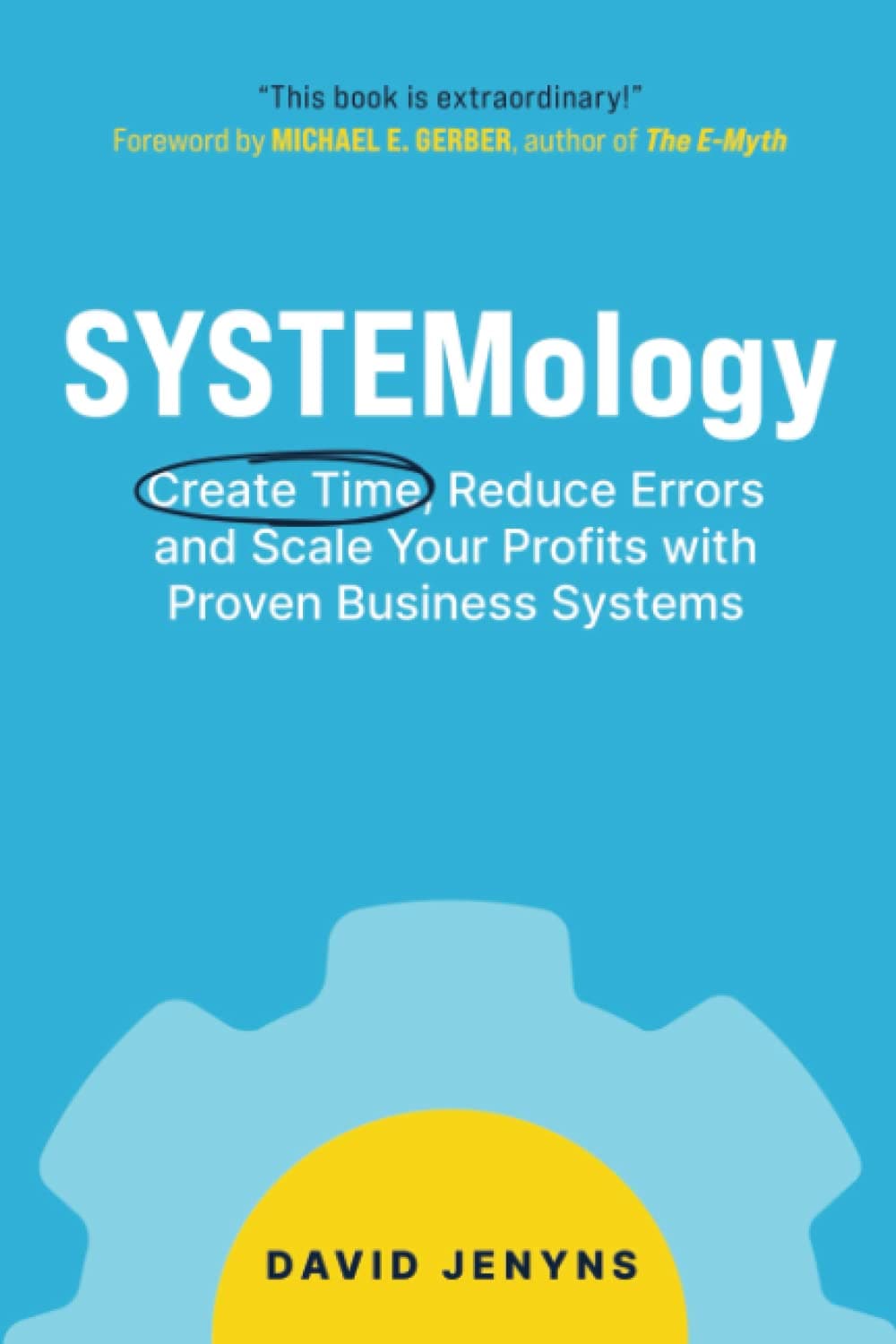
SYSTEMology
On this pageWhat I like
What I like about this book
SYSTEMology helped me see systems as freeing, not restrictive. It gives a simple process to document what matters.
Why read it
If you're buried in ops and want more time, start here.
SYSTEMology by David Jenyns is on our shelf. We only recommend a book when it gives you something you can put to work, not just something to agree with.
Below: who it is for, what it says in short, and how to turn it into a change in how your business runs. Two minutes, and you will know if it belongs on your desk.
Who it's for
Key take-aways
Book summary
Introduction
"Systemology" by David Jenyns addresses a fundamental problem faced by many small business owners: building a business that operates independently of the owner. Jenyns offers a step-by-step guide to systemising a business, allowing owners to reduce their involvement in day-to-day operations, improve efficiency, and create a scalable, saleable enterprise. The core promise is to replace dependency on individuals with reliable systems, enabling business owners to regain time and focus on growth.
Core Concepts
Why systemisation matters Many business owners fall into the trap of becoming the "chief bottleneck," where the business cannot function without their input. Systemisation helps eliminate this dependency, enabling scalability, consistency, and reduced stress.
Misconceptions about systems Jenyns debunks myths such as "systemisation is too time-consuming" or "systems kill creativity." Instead, he argues that systems create freedom and enhance creativity by removing repetitive and stressful tasks.
Critical client flow (CCF) One of Jenyns' key innovations is the CCF, which helps businesses focus on the handful of systems that truly matter, such as generating leads, closing sales, and delivering products or services.
The 7-Step SYSTEMology Process
- Define Identify the critical systems required to run your business effectively. Focus on 10–15 essential systems that create the greatest impact, such as lead generation, sales, and delivery. This initial focus avoids overwhelm and builds momentum.
- Assign Remove the owner from the systemisation process. Responsibility for documenting and improving systems should lie with team members who already perform the tasks. This step leverages the existing expertise within the team.
- Extract Extract the knowledge of your top-performing employees and create step-by-step documentation. Use simple tools like templates or videos to capture processes without overwhelming staff.
- Organise Collate systems into an accessible central repository. This ensures all team members can easily find and follow the systems. Organisation prevents confusion and promotes consistent execution.
- Integrate Get buy-in from the team by demonstrating how systems make their work easier and more efficient. This step is critical to overcoming resistance and ensuring adoption.
- Scale Once the core systems are functioning smoothly, introduce additional systems to expand capabilities, handle higher volumes, and improve overall performance.
- Optimise Continually improve systems by seeking feedback, measuring outcomes, and updating processes. This stage ensures your business evolves and stays competitive.
Key Takeaways
- Focus on the 20% of systems that generate 80% of results. Over-systemisation can overwhelm teams and waste resources. Start with the critical few and build from there.
- The business owner is not the best person to create systems. Empower team members to document processes, as they often have better insights into day-to-day operations.
- Keep systems simple. Overly complex systems discourage adoption. Use straightforward templates and avoid unnecessary details.
- Systemisation increases business value. A systemised business is more attractive to buyers because it can operate without the owner.
- Cultural shift is essential. Successful systemisation requires fostering a culture where team members embrace processes as a natural part of their workflow.
Final Thoughts
SYSTEMology provides a practical and achievable framework for small business owners seeking freedom from operational dependency. By systemising, businesses can achieve consistency, scalability, and a renewed sense of purpose, enabling owners to focus on strategic growth or personal aspirations.