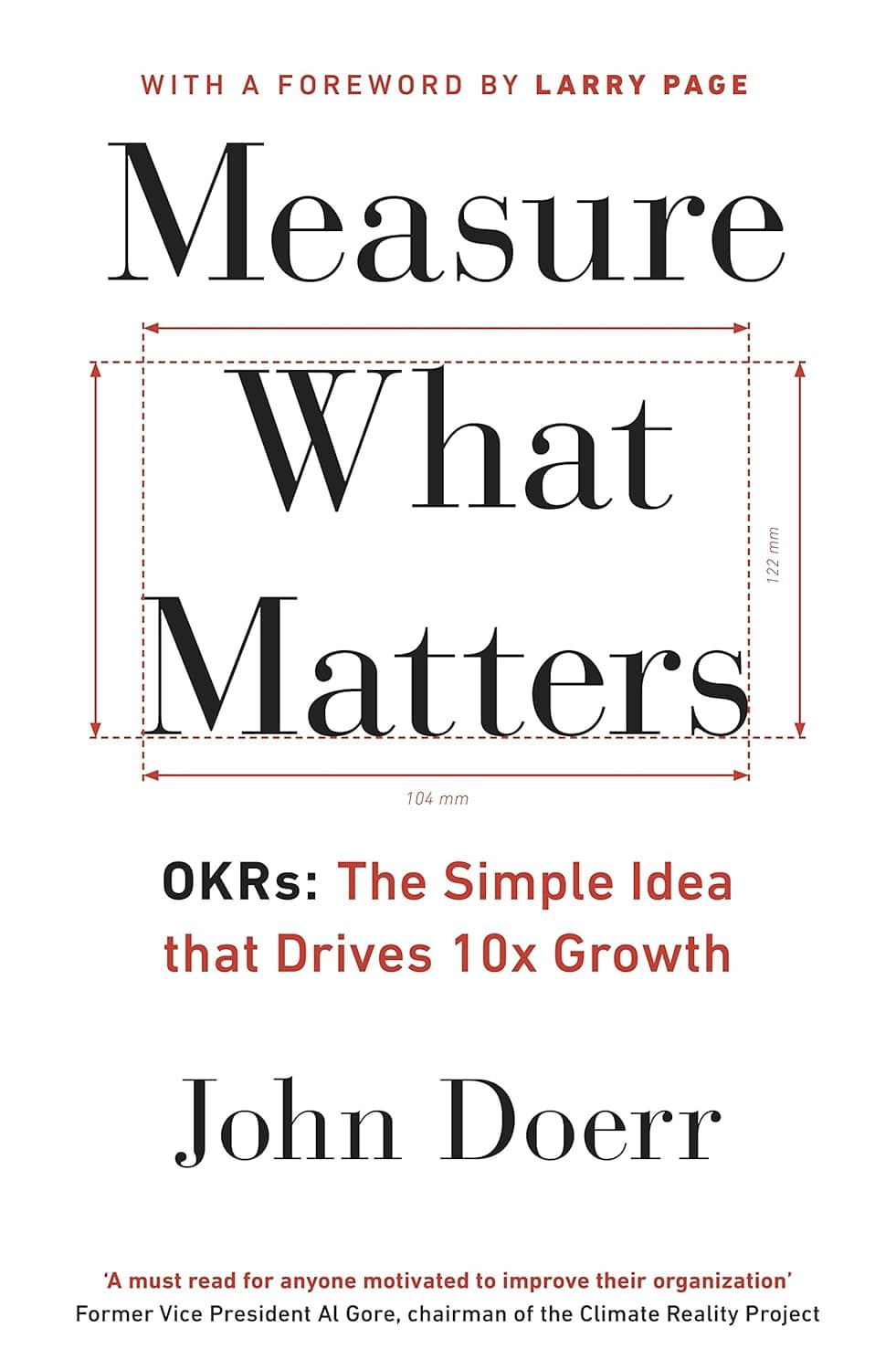
Measure What Matters
On this pageWhat I like
What I like about this book
This book helped me formalise OKRs for my team. It’s part storytelling, part structure.
Why read it
It shows how to use OKRs to align, prioritise, and track progress.
Measure What Matters by John Doerr is on our shelf. We only recommend a book when it gives you something you can put to work, not just something to agree with.
Below: who it is for, what it says in short, and how to turn it into a change in how your business runs. Two minutes, and you will know if it belongs on your desk.
Who it's for
Key take-aways
Book summary
Introduction
"Measure What Matters" by John Doerr explains the power of Objectives and Key Results (OKRs), a framework for goal-setting that drives clarity, focus, and execution. Introduced by Andy Grove at Intel and later adopted by Google, OKRs transform the way organisations prioritise and achieve goals. This book reveals how OKRs inspire teams to align their efforts, push boundaries, and deliver meaningful results.
The Core of OKRs
OKRs consist of two parts:
- Objectives: These define what you want to achieve. They should be significant, specific, and action-oriented.
- Key Results: These are measurable outcomes that define how the objective is achieved. Key Results should be time-bound and quantifiable.
Doerr breaks OKRs into four "superpowers":
- Focus and commit to priorities: Narrowing efforts to what matters most ensures impactful progress.
- Align and connect for teamwork: Transparency fosters collaboration, ensuring everyone works towards unified goals.
- Track for accountability: Regular check-ins and measurable progress keep goals on track.
- Stretch for amazing: Ambitious OKRs encourage teams to challenge limits and embrace innovation.
OKRs in Practice
The book features real-world case studies to showcase OKRs in action:
- Google’s Early Adoption: OKRs were instrumental in Google’s rapid growth, from organising the world’s information to scaling its user base. Transparency enabled teams to align their objectives with the company’s overarching mission.
- Intel’s Operation Crush: Intel used OKRs to regain dominance in the microprocessor market. By focusing on critical metrics and coordinating efforts across teams, Intel crushed the competition.
- The Gates Foundation: The foundation adopted OKRs to tackle global health crises. Clear goals helped align resources and measure impact effectively.
Implementing OKRs
The success of OKRs hinges on simplicity, transparency, and adaptability:
- Keep OKRs concise and limited (three to five objectives with measurable results).
- Encourage bottom-up input to ensure engagement.
- Review and reassess OKRs regularly to adapt to changing circumstances.
- Separate OKRs from compensation to foster bold, risk-taking behaviour.
Key Takeaways
- Alignment drives impact: OKRs connect individual goals to organisational missions, ensuring alignment at all levels.
- Ambitious goals inspire innovation: Stretch goals motivate teams to explore creative solutions.
- Measurable outcomes are critical: Success should be verifiable through data, not intuition.
- Culture matters: A transparent, supportive culture is essential for OKRs to thrive.
"Measure What Matters" emphasises that successful execution of OKRs requires discipline and leadership buy-in. It’s a must-read for leaders looking to create a results-driven organisation where teams are empowered to achieve their best work.